
How Long Does Tile and Grout Sealer Really Last in a Bay Area Home?
Sealing is the most misunderstood maintenance item in a Bay Area tile floor. Here is what a sealer actually does, why our hard water, fog and salt air shorten its life, and how to tell exactly when it is time to reseal.

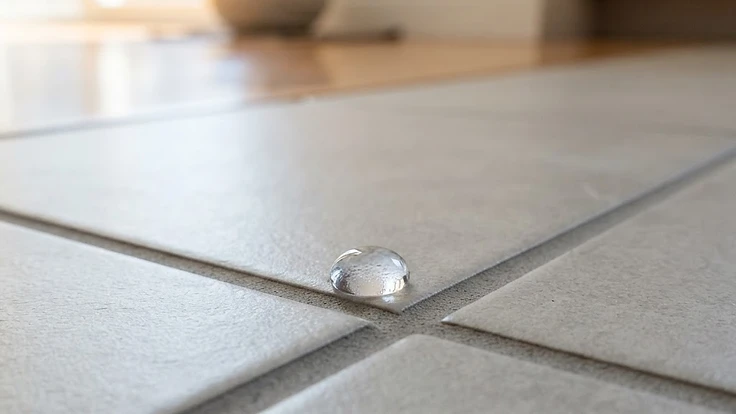
Of all the questions we are asked about tile and grout, the one with the most confusion around it is simple: how long does sealer last? The honest answer is that there is no single number, because a sealer is not a coating you paint on once and forget. It is a protective treatment that wears according to traffic, water, cleaning products and exposure, and in the Bay Area those forces are stronger than most homeowners realise. The good news is that you never have to guess. A sealed floor tells you plainly when it needs attention, and reading those signs takes about ten seconds.
What a sealer actually does (and what it does not)
A sealer is not a polish and it is not a wax. It is a treatment, usually penetrating, that soaks into the pores of the grout and any porous tile or natural stone and lines them so water, oil and staining liquids sit on top instead of soaking in. That is its whole job: buying you minutes to blot a spill before it becomes a permanent stain, and slowing the daily absorption of dirty mop water into grout joints.
What a sealer does not do is stop etching on calcite stones like marble, travertine and limestone. Acid dissolves the stone itself, not a layer on top of it, so no sealer protects against wine, citrus or the wrong cleaner. It also does not make a floor maintenance-free. Sealed grout still needs cleaning; it just cleans properly, because soil sits on the surface instead of locking into the pores.
Why the Bay Area shortens sealer life
A sealer applied to an identical floor will last meaningfully different amounts of time depending on where in the Bay Area the floor sits:
- Hard water. Our municipal water carries real mineral content. Every mop, every shower spray and every tracked-in raindrop deposits calcium on the surface, and that mineral film slowly degrades the sealer beneath it. Floors cleaned with hard water age faster than the same floor cleaned with filtered water.
- Coastal fog and salt air. From Pacifica to the western Sunset, damp marine air keeps outdoor stone, entries and even open windows damp for hours each morning. Constant moisture cycling breaks sealer down faster than the dry inland climate of, say, Walnut Creek or Livermore.
- Sun exposure. UV and heat break down topical sealers and colour-enhancing finishes, so outdoor patios, pool decks and sun-drenched entries need resealing far sooner than shaded interiors.
- Traffic. An entry hall or kitchen floor in a busy family home wears its sealer through physically, as grit and footfall abrade the protected surface, while a guest bathroom floor may keep its sealer for years.
How long sealer really lasts, by location
These are the realistic cadences we advise for Bay Area homes after a proper clean and reseal:
- Indoor ceramic and porcelain floors (grout sealed): 2 to 3 years in living areas, 12 to 18 months in kitchens and entries.
- Natural stone floors (marble, travertine, limestone): 1 to 3 years depending on traffic; honed, softer stones lean toward the shorter end.
- Showers and wet areas: yearly, without exception. Constant saturation is the harshest test of any sealer.
- Outdoor patios, pool decks and entries: yearly with a UV-rated, outdoor-rated sealer, sooner near the coast.
- Saltillo and terracotta: 1 to 3 years indoors, yearly outdoors or in wet areas.
If a sealer company promises five or ten years on a Bay Area shower or entry, treat it as marketing rather than chemistry. The sealer may be excellent, but the environment will outpace it.
The water-drop test: your ten-second sealer check
You do not need a professional to tell you whether your sealer is still working. Put a few drops of water on the grout joint and the tile face. If the water beads up and sits there, the sealer is doing its job. If it soaks in and darkens the surface within a minute or two, the pores are exposed and the countdown to a permanent stain has started. Test an entry, a kitchen grout line and a shower wall, and you will have an accurate map of what needs resealing without anyone lifting a tool.
Signs it is time to reseal
- Water stops beading and starts soaking in (the definitive test).
- Grout is darkening in traffic lanes faster than it used to.
- Spills that once wiped clean now leave shadows.
- Shower grout is growing mould within weeks of a deep clean, because the pores are open again.
- A previously sealed natural stone floor is starting to etch or stain in spots it used to shrug off.
Choosing the right sealer
Not every sealer suits every surface, and matching the product to the material is most of the result:
- Penetrating (impregnating) sealers soak into the pores and leave the look unchanged. The right default for ceramic and porcelain grout, and for natural stone where you want the original matte or honed appearance.
- Topical sealers and finishes sit on the surface and can add a sheen or a colour-enhancing "wet look." Useful for slate, saltillo and some decorative stones, but they wear physically and need periodic renewal, especially outdoors.
- Outdoor-rated, UV-stable sealers are essential for any patio, pool deck or sun-exposed entry. An interior sealer taken outdoors will go patchy within a season.
- Colour-enhancing sealers deepen the natural tones of slate, sandstone and bluestone. Choose one rated for UV stability so the rich look does not fade the way the old coating did.
Keeping a sealed floor cleaner for longer
A reseal only pays off if the routine between services protects it:
- Dust-mop or vacuum (beater bar off) regularly; grit is what physically wears the sealed surface.
- Clean with a pH-neutral stone or tile cleaner only. Vinegar, citrus and ammonia products strip sealer and, on calcite stones, etch the surface underneath.
- Blot spills rather than wipe them; wiping spreads the liquid while it is reacting.
- Squeegee showers after every use to remove hard water before it can dry and deposit mineral.
- Use mats at entries to catch the grit and fog-damp shoes that wear the sealer fastest.
If your grout has started darkening quickly, your shower is growing mould back within weeks, or water no longer beads on your stone, the sealer has done its time, not the surface beneath it. A free assessment will show you exactly which areas are still protected, which are exposed, and what resealing would bring back, usually for a fraction of what replacement or regrouting would cost.
Want this handled professionally?
Our Bay Area technicians clean, seal and restore tile and stone of every kind — with free, no-obligation quotes.