
Pet Accidents on Tile and Grout: Why the Smell Comes Back and How to Stop It for Good
Tile is sold as pet-proof, but grout is porous and urine soaks deep into the joint and the subfloor beneath it. Here is why the odour keeps returning, what a surface mop can never reach, and how the smell is actually removed.

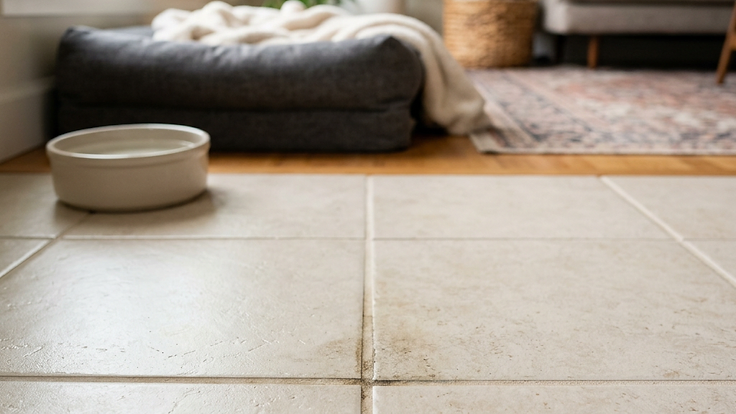
Every week we meet a Bay Area homeowner who has scrubbed, mopped, sprayed and even pulled up a rug, and the smell still comes back the moment the weather turns warm or the room gets damp. The floor looks clean. The odour says otherwise. This is one of the most common and most misunderstood problems in tile and grout, and the reason it is so stubborn comes down to one fact: tile is waterproof, but the grout between it is not.
Why the smell returns
A pet accident does not sit on the surface. Urine is a liquid, and within minutes it wicks sideways into the porous cement-based grout and downward into the thin-set and subfloor beneath. Once it is below the surface, every mop, spray and steam cleaner only treats the top millimetre of the problem. The urine salts stay locked in the joint, and every time humidity rises, the floor warms, or the grout gets wet again, those salts re-release their odour into the room. That is why the smell seems to come out of nowhere weeks after you cleaned, and why it is worst in bathrooms, laundry rooms and anywhere the floor stays damp.
Why ordinary cleaning does not work
Household cleaners are designed for surfaces, not for the inside of a grout joint. Three common mistakes make it worse:
- Bleach and ammonia-based sprays kill surface bacteria but leave the uric acid salts untouched. They also damage grout and, on natural stone, etch the surface.
- Mopping spreads the contaminated water across a wider area of the floor rather than lifting it out of the joint.
- Steam cleaners can reach a little deeper, but the pressure and heat push as much moisture into the subfloor as they pull out, and the trapped salts remain.
If you have ever cleaned the floor thoroughly, felt confident it was fixed, and then smelled it again a week later, this is exactly why.
How odour is actually removed
Real removal means treating the source, not the surface. A proper restoration does three things in sequence:
- Deep extraction. High-pressure, enclosed hot-water extraction flushes the joint and pulls the contaminated water back out rather than pushing it deeper. This lifts the urine salts that no mop can reach.
- Enzyme or oxidising treatment. A pet-specific enzyme or oxidising product is applied and allowed to dwell so it neutralises the remaining uric acid at the source, in the grout and the top layer of subfloor. This is the step most homeowners skip, and it is the one that actually stops the smell.
- Sealing. Once the joint is clean and fully dry, a penetrating sealer lines the pores so future accidents sit on the surface long enough to be blotted, instead of soaking in again.
Where an accident has been long-standing or repeatedly soaked one spot, the grout in that area may be permanently stained or softened. In those cases the honest fix is to cut out and replace that section of grout before sealing, so the repair is invisible and the problem does not return.
What you can do between services
- Blot fresh accidents immediately with a thick towel and press down, do not wipe, so you lift the liquid rather than spread it.
- Use a pet-specific enzyme cleaner on the spot, and let it dwell per the label. Generic disinfectant will not neutralise the salts.
- Keep the room ventilated and the floor dry; humidity is what re-releases trapped odour.
- Have the grout sealed once it is clean. An unsealed joint will absorb the next accident just as fast as the first.
- Test before you commit: a drop of water on the grout that soaks in and darkens means the joint is open and unprotected.
When to call a professional
If the odour returns after you have cleaned thoroughly, if a spot on the floor still smells when it is wet, or if you are preparing to sell and want the floor genuinely neutral rather than merely fresh-smelling, the problem is almost certainly below the surface. A free assessment will show you which grout lines have absorbed contamination, whether sealing is enough or a section needs regrouting, and what it would take to make the floor odour-free for good, usually for far less than replacing it.
Tile floors are one of the best surfaces a pet-owning home can have. Grout is the one part of that floor that needs protecting, and once it is properly cleaned and sealed, the smell that kept coming back stops coming back at all.
Want this handled professionally?
Our Bay Area technicians clean, seal and restore tile and stone of every kind — with free, no-obligation quotes.