
Grout Color Sealing vs. Regrouting: What Bay Area Homeowners Should Know
Discoloured grout does not automatically mean tearing it out. Color sealing recolours and reseals the joints you have for a fraction of the cost — but sometimes regrouting is the honest answer. Here is how to tell.

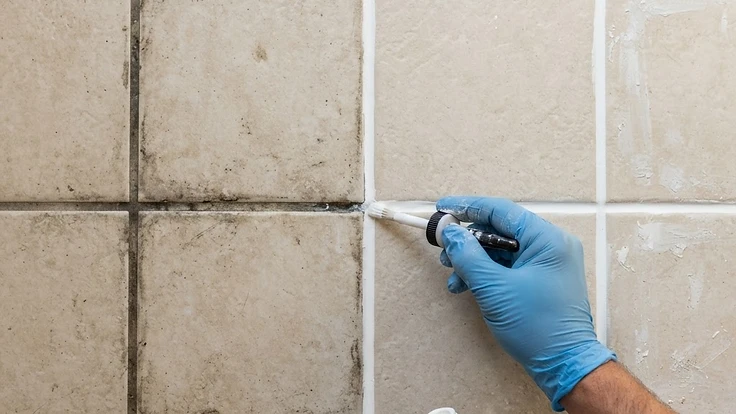
When grout goes grey, yellow or black, most homeowners assume the fix is regrouting — chiselling out every joint and packing it with new grout. It is a big, dusty, expensive job, and the good news is it is only necessary in a minority of cases. Most discoloured grout in Bay Area homes is structurally sound: the problem is inside the pores, not the grout itself. For that majority, grout color sealing achieves what regrouting promises — clean, uniform, bright joints — at a fraction of the cost, mess and downtime.
What color sealing actually is
Color sealing is a two-step process. First, the grout is professionally deep-cleaned with heated extraction to remove the embedded soil, soap residue and mineral build-up that no mop reaches. Then a colour sealant — a pigmented, penetrating product available in virtually any shade — is applied to each joint. The result is grout that looks newly installed, in whatever colour you choose: original white, a modern grey, or a darker shade chosen to hide everyday life in a busy kitchen or shower.
The sealer's real value is what it leaves behind: sealed grout is essentially non-porous. Water, spills and soil sit on top instead of soaking in, which means routine mopping genuinely cleans it — instead of pushing dirty water back into the pores, which is exactly how it discoloured in the first place.
When color sealing is the right call
- Grout is discoloured but intact — no widespread cracking or crumbling.
- Staining is uneven and patchy, or you want a colour change without a construction project.
- Mould in showers returns within weeks of cleaning (sealing removes the pores it roots in).
- You want a durable result: a properly maintained color-sealed floor holds its look for years.
When regrouting is the honest answer
- Cracked, crumbling or missing grout. Colour sealant cannot repair structure — it can only colour sound joints.
- Grout that was never sealed, has been saturated for years, and is soft or powdery when scratched.
- Movement cracks along tiles over unstable substrate — the grout is failing because something underneath is, and resealing would only mask it.
- A remodel where tile is being saved but joints are being redesigned (e.g., widening joints or changing grout colour from dark to light in wide joints).
A fair professional assessment covers both honestly — sometimes a floor needs a few joints repaired first, then color sealed; occasionally it genuinely needs regrouting. What it almost never needs is the assumption that discolouration alone means demolition.
Living with color-sealed grout
Maintenance is simple: pH-neutral cleaner, no bleach-based sprays, and resealing of wet areas every few years. In showers, a daily squeegee and a running fan do most of the preventive work — especially in East Bay and South Bay homes where hard water keeps mineral scale hunting for unsealed surfaces.
If you are standing in your kitchen or bathroom right now looking at grout you have been apologising for, a free assessment will tell you in minutes which side of the line your floor falls on — and most floors fall on the good side.
Want this handled professionally?
Our Bay Area technicians clean, seal and restore tile and stone of every kind — with free, no-obligation quotes.