
Before the Rains Come: Restoring Bay Area Flagstone Paths and Patios
Dull, grey, grout-hazed flagstone is the most common outdoor stone problem we see in the Bay Area — and autumn is the deadline. Here is how an acid wash and seal brings the colour back.

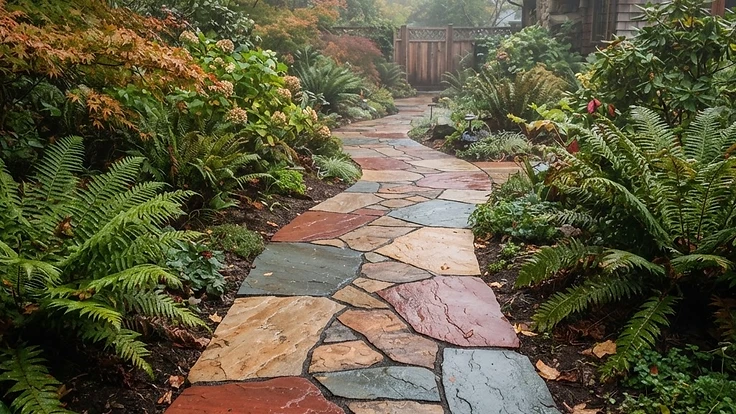
There is a version of your flagstone path you have probably never seen: the one with colour. Bay Area flagstone — sandstone, bluestone, quartzite — is laid in warm reds, buffs, blues and greys, but within a season or two of installation many paths and patios have gone uniformly dull and grey. Homeowners often assume that is just what the stone does. It is not. It is almost always a grout haze, dirt and efflorescence problem — and it is fixable in a single visit.
Why flagstone goes grey
- Grout and mortar haze. During installation, mortar smeared across the stone faces is often never properly cleaned off. It dries as a pale film that masks the stone's colour and texture — turning a multicoloured sandstone path into what looks like plain concrete.
- Efflorescence. The white, powdery mineral bloom that migrates up through the stone and jointing from damp substrate. In our fog-damp climate it can recur relentlessly until the stone is cleaned and sealed.
- Organic growth. Algae and moss take hold in shaded, slow-drying spots, leaving dark, slippery patches — a genuine slip hazard on steps and north-facing patios.
- Sun and moisture cycling. Daily fog-to-sun cycles drive moisture in and out of the stone, dulling the surface and breaking down old topical sealers until they go patchy.
The restoration: acid wash, then seal
The transformation is one of the most dramatic in our trade. A controlled acid wash strips the mortar haze, mineral deposits and dead sealer from the surface, opening the stone's true colour and texture. The stone is then fully neutralised, the joints cleaned or repaired, and the whole surface sealed with a penetrating, outdoor-rated sealer that brings out the natural tones — the reds come back red, the blue stones come back blue. A wet-look or colour-enhancing finish is available where you want the saturated, just-rained look permanently.
Why the deadline is autumn
Restoration is best done in the dry months for a practical reason: the stone needs a genuine drying window for the sealer to cure properly, and the sealer needs to be in place before months of steady rain arrive. Winter rain falling on unsealed flagstone drives water deep into the stone and the substrate underneath, feeding efflorescence and freeze-free-but-damp conditions that keep the stone permanently saturated. Sealed before the rains, the same path sheds water all winter and enters next spring looking the way it was meant to.
Keeping it looking restored
- Rinse the surface with fresh water occasionally — hose off mud and leaf tannins before they sit.
- Keep the joints topped up; open joints let water channel into the substrate and restart efflorescence.
- Reseal outdoor flagstone every 1–2 years — closer to yearly near the coast, where fog and salt keep the stone damp.
- Never use wire brushes or acidic household cleaners; they abrade the surface and strip the sealer.
If your path or patio has gone the colour of concrete, it is very likely one cleaning and sealing away from the surface you actually chose. A free assessment will tell you exactly what is haze, what is growth, and what the stone will look like restored — usually within days of your call.
Want this handled professionally?
Our Bay Area technicians clean, seal and restore tile and stone of every kind — with free, no-obligation quotes.